
Surveying for Super El Niño
Every 3-4 years, the weather in Southern California becomes very unusual. This is because of El Niño, a climate event that involves the warming of the oceans surface temperature. This warming is due to weaker trade winds over the tropical pacific ocean, leading to a decrease in upwelling and less wind to lower the temperature of water. This change in wind patterns results in heavy rain and winds for the southern states.
But what about the Super El Niño we’ve been hearing about? A Super El Niño is defined by an El Niño where ocean temperatures rise by 2 degrees Celsius or more. There have only been 6 in recorded history, with the most recent one said to be happening this year. Due to its extreme nature, its impact could be more serious than that of a standard El Niño. Accounts of past events document severe flooding, extreme temperatures, cyclones and the loss of crops and plants.
We can picture how this could affect humans, but what about birds? The changes in habitat such as extreme temperatures and lack of upwelling makes it hard for birds to find food. This, combined with extreme weather events can make it hard for birds to survive in their normal area. This leads to birds having to change migration patterns and go to areas that can better suit their needs. We are seeing this in cases such as reports of South American birds found far from home.
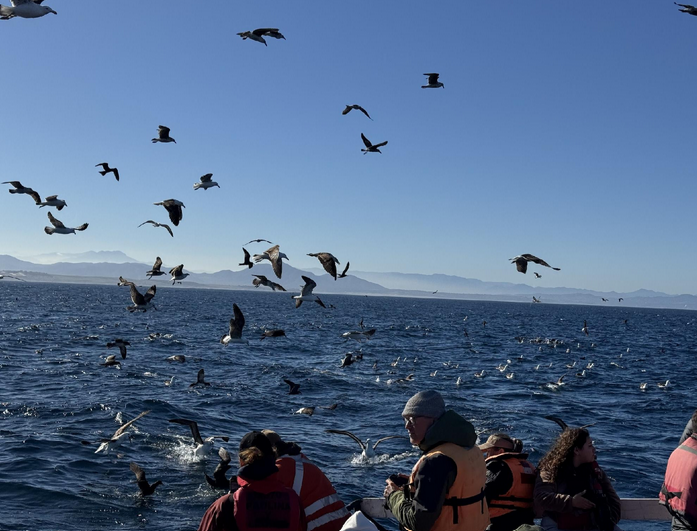
Kelp Gull, a South American Seabird spotted in Nicuragua. Photo by Tyler Wenzel https://ebird.org/region/NI/post/8236
In response to this, the G.V.P.’s (Green Valley Project) Thousand Oaks youth council is conducting bird surveys. What are bird surveys? They are a great way to collect data on the amount and types of birds in an area. Our group chooses an area such as a trail to conduct the survey, and document the birds we find along the way. A great tool for this is the app Merlin, which can identify bird species based on photos or audio. It’s important to note the climate conditions of your area, such as the weather, humidity, temperature and time of day.
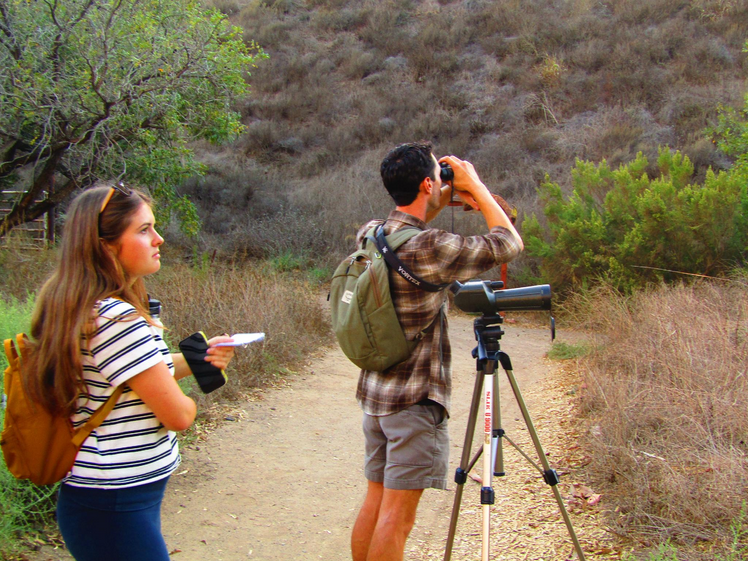
GVP members on a bird survey.
But what does this have to do with El Niño? The data we collect will give us a look into the populations and locations of bird species during this El Niño. This is important because we can compare this data to the past and future, giving us a better understanding of how severe this El Niño is by analyzing how it is affecting birds. This will guide our research and decision making in the future, giving us insight to help us take care of our world.
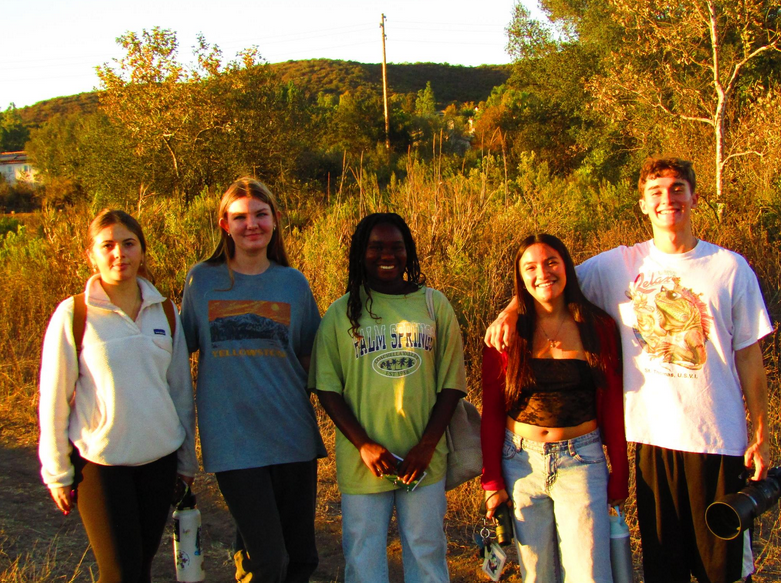
Members of the GVP Thousand Oaks Youth Council.
You can help too! Go out with your friends and count the birds in your area. If you want a quick visual guide on how to conduct bird surveys, you can also check out this tik-tok here: https://www.tiktok.com/@greenvalleyproject/video/7698556719672184094