
Lets Talk Trees
This Fall, our Ojai Youth Council members will put their research into action by leading a community tree-planting project throughout Ojai. Using QGIS mapping software, the team analyzed local temperature and environmental data to identify urban heat hotspots and create maps highlighting areas where additional tree canopy is needed most.
In partnership with the City of Ojai, the group will help plant 50 trees in locations selected through this data-driven process, including Descanso Avenue, Sunset Place, and Daly Ranch Park. These new trees will provide shade, improve air quality, support local wildlife, and help reduce the impacts of extreme heat for years to come. Following the planting, our Saturday CREW team will help care for the trees through regular monitoring and watering to ensure they become a lasting benefit to the community.
The following tree species have been selected as potential candidates for this project. Review the options below and cast your vote to help determine which trees will become part of Ojai’s growing urban forest.
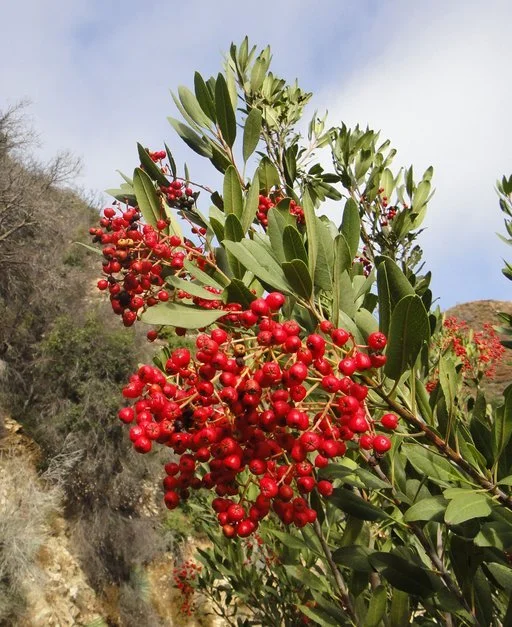
Toyon (Heteromeles arbutifolia)
This shrub produces red berries in the winter feeding bats and birds and white flowers in the Summer providing nectar for pollinators. Its typically found in chaparral communities and can grow between 6ft and 30 ft tall.
Fun Fact: Because its appearance is so similar to holly (which has red berries and spiky leaves), early settlers called it California Holly. This may have inspired the name Hollywood as there are many toyons on the trails in that area and across Southern California.
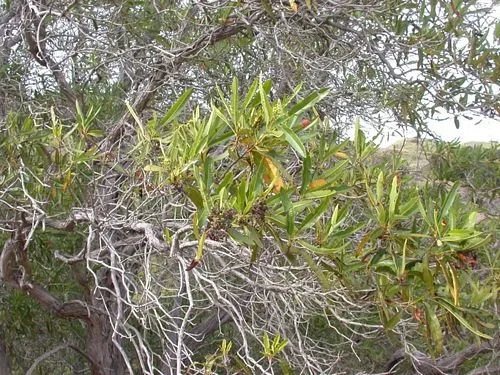
Catalina Ironwood (Lyonothamnus floribundus)
This tree has a flowering season in Spring and Summer, grows between 25 and 50 ft tall and is typically found in either chaparral or oak woodland communities and is endemic to the Channel Islands.
Fun Fact: These trees have thick, dense wood which was used by local indigenous communities to make spear shafts and early sailors crafted hand spikes. Hence the name ironwood.
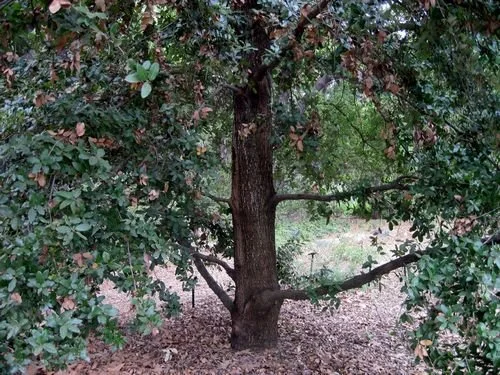
Island Oak (Quercus tomentella)
This tree grows from 33 to 66 ft tall, is typically found in Chaparral, Closed-cone Pine Forest, or Foothill Woodland communities and is endemic to the Channel Islands. The Island Oak flowers in Spring and Summer.
Fun Fact: This oak tree grows the largest and most textured acorns of any other oak tree!
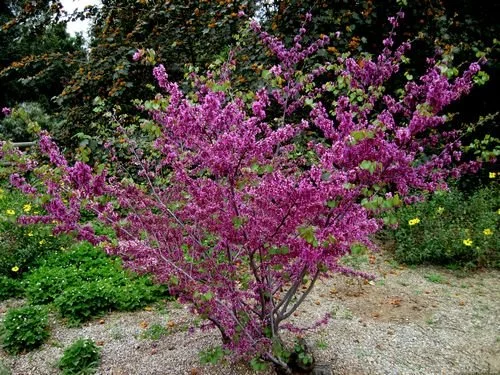
Western Redbud (Cercis occidentalis)
This shrub grows from 10 to 20 ft tall and produces pinkish, red flowers in the Spring. It also grows 3 inch legume pods that are thin and dry.
Fun Fact: The cool thing about the western redbud is that you can actually eat the flowers and seed pods. The flowers are sweet and tart and can make salads more vibrant and colorful. Young seed pods resemble snap peas and can be eaten raw or sauteed.
Coast Live Oak (Quercus agrifolia)
This tree provides abundant shade and can grow up to 82 ft tall. It grows a bit wider than the other trees listed so would be a better fit for the park rather than a street tree. What sets this oak tree apart is its small spiky leaves. These trees flower in the Spring and Summer and then grow acorns which support local wildlife. Oak trees are habitat for over 500 pollinator species!
Fun Fact: California’s indigenous people, the Chumash, relied on acorns from coast live oak trees as a food source for at least 9,000 years! They would use stone surfaces to grind acorns into a powder which they then used as a base to create foods such as breads, stews and cakes. Because a mature oak tree can produce up to 1000 pounds of acorns per year, they provided an ample supply of food.
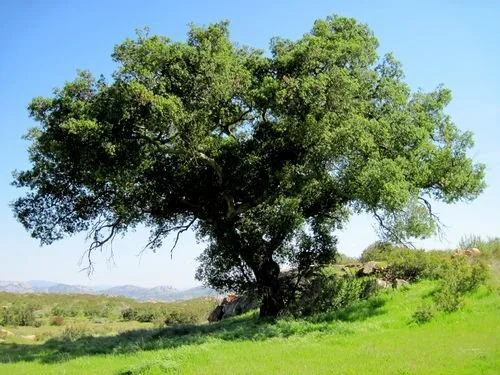
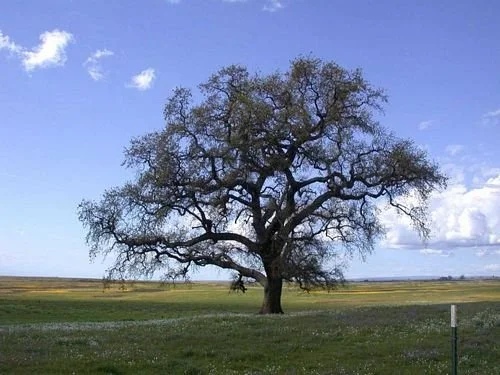
Valley Oak Trees (Quercus lobata)
This oak tree has larger lobed leaves and can grow up to 100 ft tall. This tree provides habitat for pollinators just like the coast live oak and has a similar flowering season. They are typically found in dense riparian forests, open foothill woodlands and valley savannas. These trees have been known to live up to 600 years old.
Fun Fact: Early settlers in California would look for Valley Oak Trees when determining if a plot of land was suitable for agriculture. This is because the shade and root systems provide for moist, nutrient dense soil.
Please let us know which trees you would like to see in your community! Email us at greenvalleyprojectojai@gmail.com with your vote for your top 3 tree species that you would like to see in the Ojai community.
Images were sourced from calscape.org